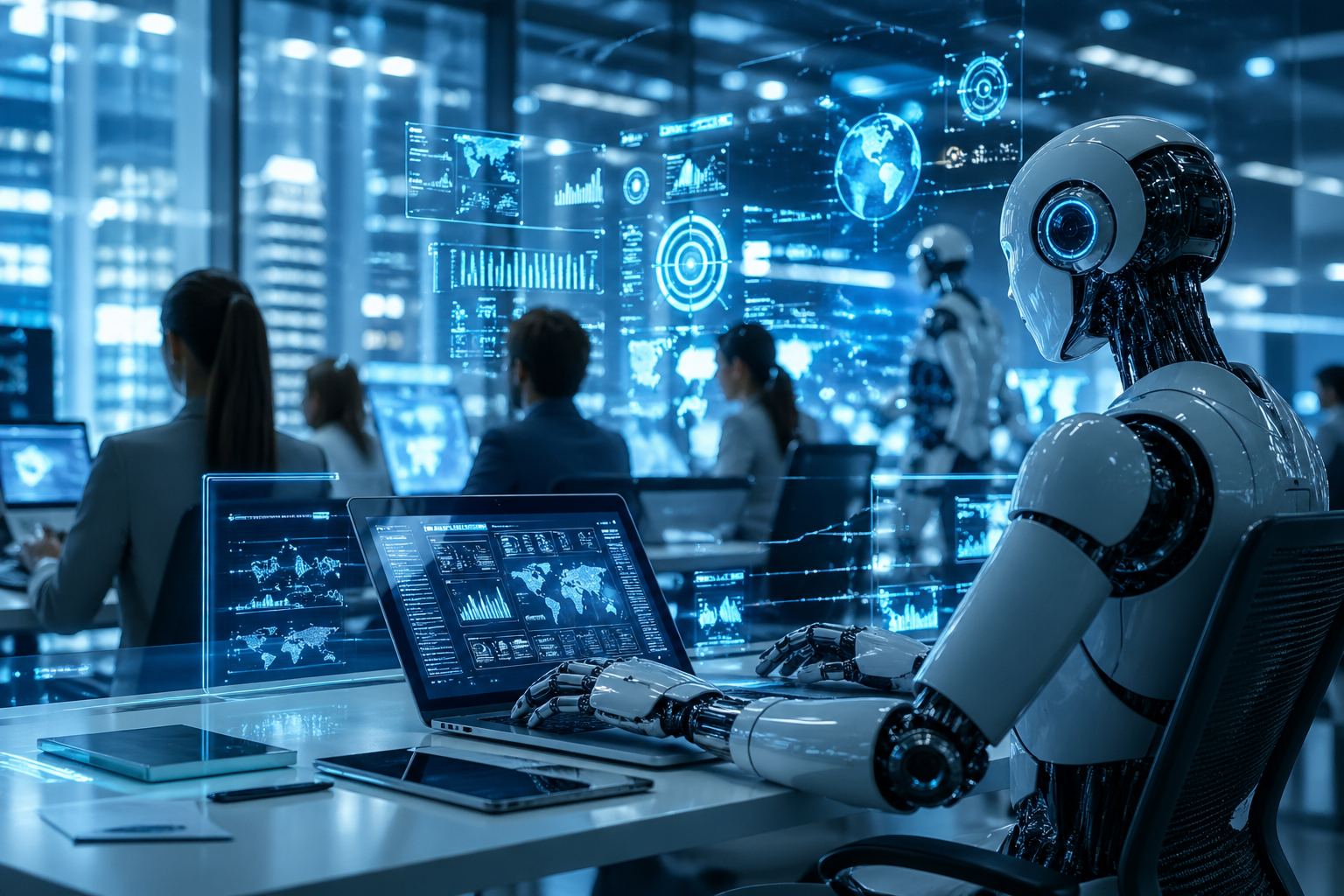
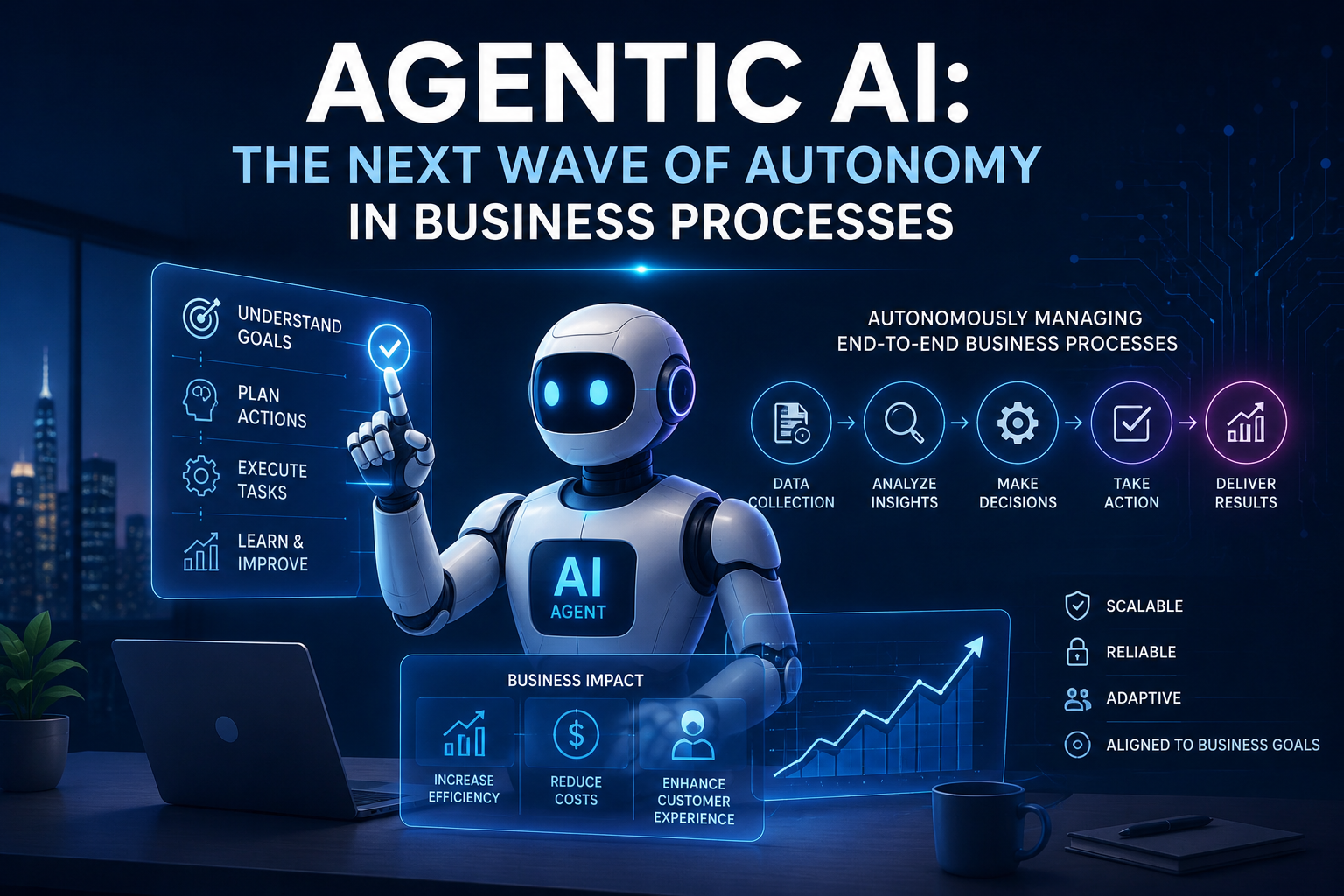
If you think AI is still just about chatbots answering customer queries, you’re already behind. In 2026, AI agents have evolved into autonomous systems capable of planning, executing, and optimizing entire workflows without constant human input. Unlike traditional AI tools that wait for commands, these systems act proactively—almost like digital employees working around the clock.
The shift didn’t happen overnight. Over the past two years, businesses experimented with generative AI tools, but most were limited to content creation or basic automation. Now, companies are deploying goal-driven AI agents that can interact with software, analyze data, and make decisions independently. According to recent research, these agents are no longer experimental—they are already in production environments delivering measurable ROI across industries.
This transformation is comparable to moving from calculators to full-fledged computers. Instead of assisting with isolated tasks, AI agents now manage entire processes end-to-end, reducing human intervention and increasing operational speed dramatically.
The Rise of Agentic AI Platforms
The real catalyst behind this shift is the emergence of agentic AI platforms. These platforms allow businesses to build, deploy, and manage AI agents at scale, often with low-code or no-code tools. That means you don’t need a team of AI engineers to get started—business users themselves can design intelligent workflows.
Industry experts highlight that 2026 is the year AI transitions from being a “tool” to becoming a collaborative partner. Systems are now capable of anticipating needs, coordinating across departments, and completing tasks autonomously.
Think of it like hiring a virtual team that never sleeps. These agents monitor operations, detect inefficiencies, and act instantly—something human teams simply cannot match at scale.
Key Statistics Driving the AI Agent Revolution
Adoption Rates Across Industries
Numbers tell the real story, and the statistics around AI agents in 2026 are hard to ignore. Around 79% of organizations reported some level of AI agent adoption, with an overwhelming 96% planning to expand their use.
Even more striking, about 73% of business leaders believe AI agents will provide a competitive advantage in the near future. This signals a clear shift from experimentation to strategic implementation.
Industries with repetitive workflows—like customer service, eCommerce, and logistics—are leading the charge. Why? Because AI agents thrive in environments where tasks can be standardized and optimized.
Investment and Enterprise Demand
Big tech companies are doubling down on this trend. Massive investments in AI infrastructure and cloud platforms show that enterprises are preparing for an agent-driven future.
Recent developments indicate that AI is no longer optional—it’s becoming a core business requirement. Companies that fail to adopt these systems risk falling behind competitors who operate faster, smarter, and more efficiently.
How AI Agents Work Behind the Scenes
Core Components of Autonomous Systems
At their core, AI agents are built on a combination of advanced technologies:
- Memory systems to store and recall information
- Planning engines to break down complex goals
- Tool integration to interact with software and APIs
- Decision-making models to evaluate outcomes
This combination allows them to function independently, much like a human employee handling multiple tasks simultaneously.
Instead of simply responding to prompts, these agents analyze situations, create action plans, and execute them step by step. That’s what makes them truly autonomous.
Multi-Agent Collaboration Explained
Here’s where things get even more interesting: AI agents don’t just work alone—they collaborate.
In many organizations, multi-agent systems are now being deployed. Each agent specializes in a specific function, such as data analysis, customer interaction, or process optimization. Together, they form a coordinated digital workforce.
This approach mirrors how human teams operate but with one major difference—AI agents can process information and act in real time without delays. The result? Faster execution, fewer errors, and significantly improved efficiency.
Industries Being Transformed by AI Agents
Customer Service and Support Automation
Customer service has seen one of the most dramatic transformations. AI agents can now handle entire customer interactions—from initial inquiry to problem resolution—without human involvement.
This isn’t just about chatbots anymore. These systems can access customer data, process requests, and even make decisions, delivering faster and more personalized support.
Businesses benefit from reduced costs, while customers enjoy quicker response times. It’s a win-win scenario.
Software Development and Engineering
Software development is undergoing a revolution. AI agents are now capable of writing, testing, and deploying code with minimal human input.
In fact, reports show that a significant portion of new code in major tech companies is already generated by AI systems. This doesn’t eliminate developers but transforms their role into reviewers and strategists rather than manual coders.
The productivity gains here are massive—tasks that once took weeks can now be completed in days or even hours.
Marketing and Sales Optimization
Marketing has shifted from manual campaigns to autonomous optimization systems. AI agents analyze user behavior, adjust campaigns in real time, and even generate content tailored to individual customers.
Imagine running a marketing campaign that continuously improves itself without human intervention. That’s the reality in 2026.
Impact on Jobs and Workforce Dynamics
Jobs at Risk vs Jobs Created
Let’s address the big question: Are AI agents replacing jobs?
The answer is more nuanced than a simple yes or no. While some repetitive roles are being automated, new opportunities are emerging in areas like:
- AI system management
- Data analysis
- Workflow design
- Ethical AI governance
The nature of work is changing, not disappearing.
The Rise of Human-AI Collaboration
Instead of replacing humans, AI agents are becoming collaborators. Employees now work alongside AI systems, leveraging their capabilities to achieve better results.
Think of AI as a powerful assistant that handles routine tasks, allowing humans to focus on creativity, strategy, and decision-making.
Business Benefits of AI Agents
Productivity and Cost Efficiency
One of the biggest advantages of AI agents is their ability to boost productivity while reducing costs. By automating repetitive tasks, businesses can operate more efficiently and allocate resources more effectively.
Some organizations report significant reductions in operational expenses, along with faster turnaround times.
Decision-Making and Real-Time Insights
AI agents don’t just execute tasks—they provide insights. By analyzing data in real time, they help businesses make informed decisions quickly.
This capability is particularly valuable in fast-paced industries where timing is critical.
Challenges and Risks of Autonomous AI
Ethical Concerns and Governance
With great power comes great responsibility. The rise of autonomous systems raises important ethical questions:
- Who is accountable for AI decisions?
- How do we ensure fairness and transparency?
- What safeguards are needed to prevent misuse?
These are critical issues that businesses must address.
Security and Reliability Issues
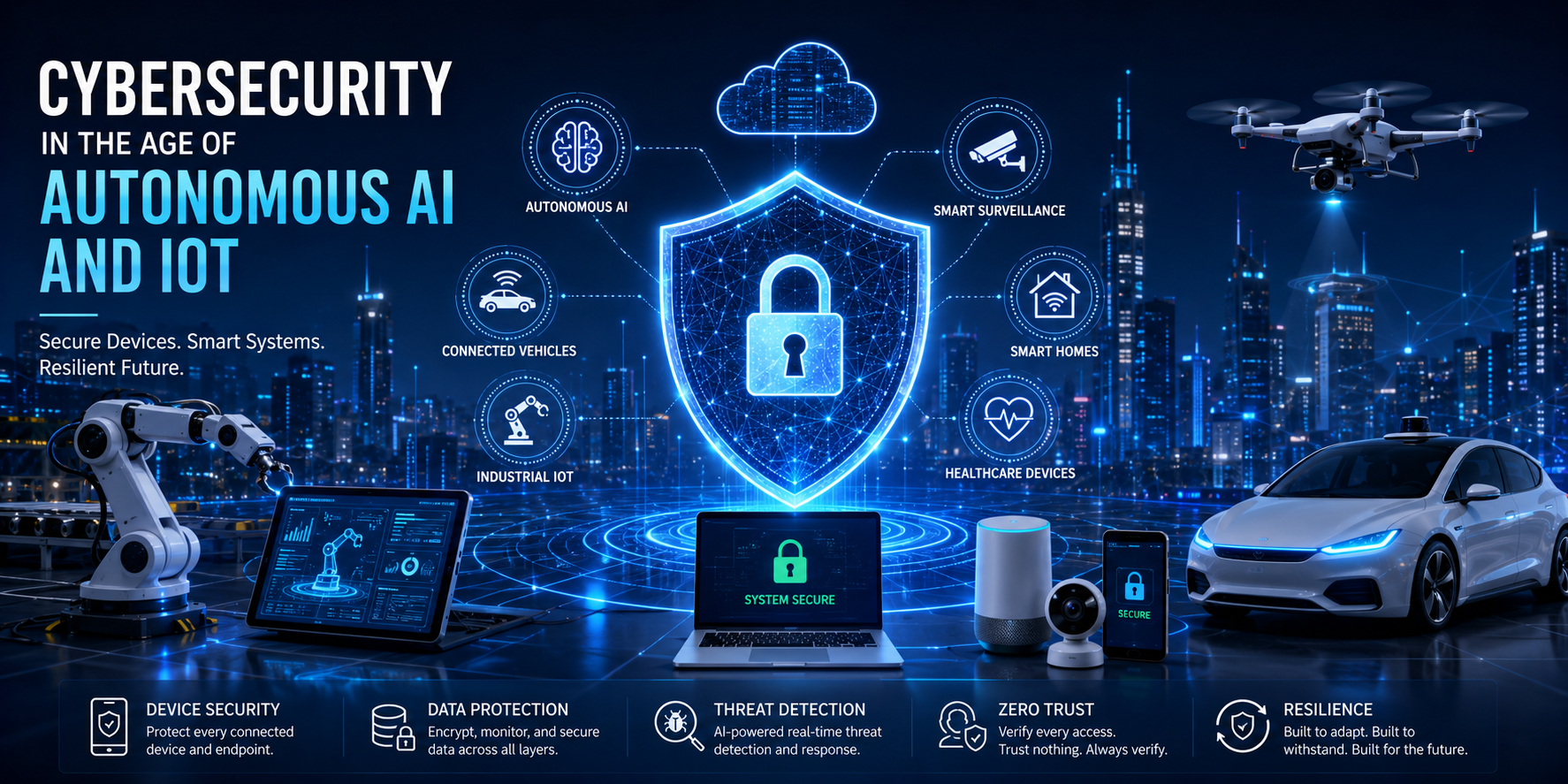
Autonomous systems also introduce new risks. Bugs, biases, or security vulnerabilities can have serious consequences when AI is operating independently.
That’s why governance, monitoring, and human oversight remain essential.
Future Trends: What Comes After 2026
AI as Digital Employees
The concept of AI as digital employees is becoming a reality. These agents will have defined roles, responsibilities, and performance metrics—just like human workers.
Businesses may soon manage teams that include both humans and AI systems.
Fully Autonomous Enterprises
Looking ahead, we may see the rise of fully autonomous enterprises, where AI agents handle most operations with minimal human intervention.
This doesn’t mean humans will become obsolete—it means their roles will evolve significantly.
How Businesses Can Prepare for AI Agents
Implementation Strategies
To stay competitive, businesses need a clear strategy for adopting AI agents:
- Start with high-impact use cases
- Integrate AI with existing systems
- Establish governance frameworks
A phased approach ensures smoother implementation and better results.
Skills and Workforce Transformation
Employees must adapt to this new reality by developing skills in:
- AI literacy
- Data analysis
- Strategic thinking
Organizations that invest in workforce transformation will be better positioned for success.
Conclusion
AI agents are not just another tech trend—they represent a fundamental shift in how work gets done. In 2026, we’re witnessing the transition from tools that assist humans to systems that act independently and intelligently.
Businesses that embrace this change will unlock new levels of efficiency, innovation, and growth. Those that resist may struggle to keep up in an increasingly competitive landscape.
The future isn’t about humans versus AI—it’s about how effectively we can work together.
FAQs
1. What is an AI agent?
An AI agent is an autonomous system that can plan, execute, and complete tasks independently using data, tools, and decision-making models.
2. Are AI agents replacing jobs in 2026?
They are transforming jobs rather than replacing them entirely, creating new roles while automating repetitive tasks.
3. Which industries benefit most from AI agents?
Customer service, software development, marketing, and logistics are among the industries seeing the biggest impact.
4. How can businesses start using AI agents?
Start with small use cases, integrate AI into workflows, and gradually scale while ensuring proper governance.
5. What are the risks of AI agents?
Key risks include ethical concerns, security vulnerabilities, and lack of transparency, which require careful management.


Leave A Comment