
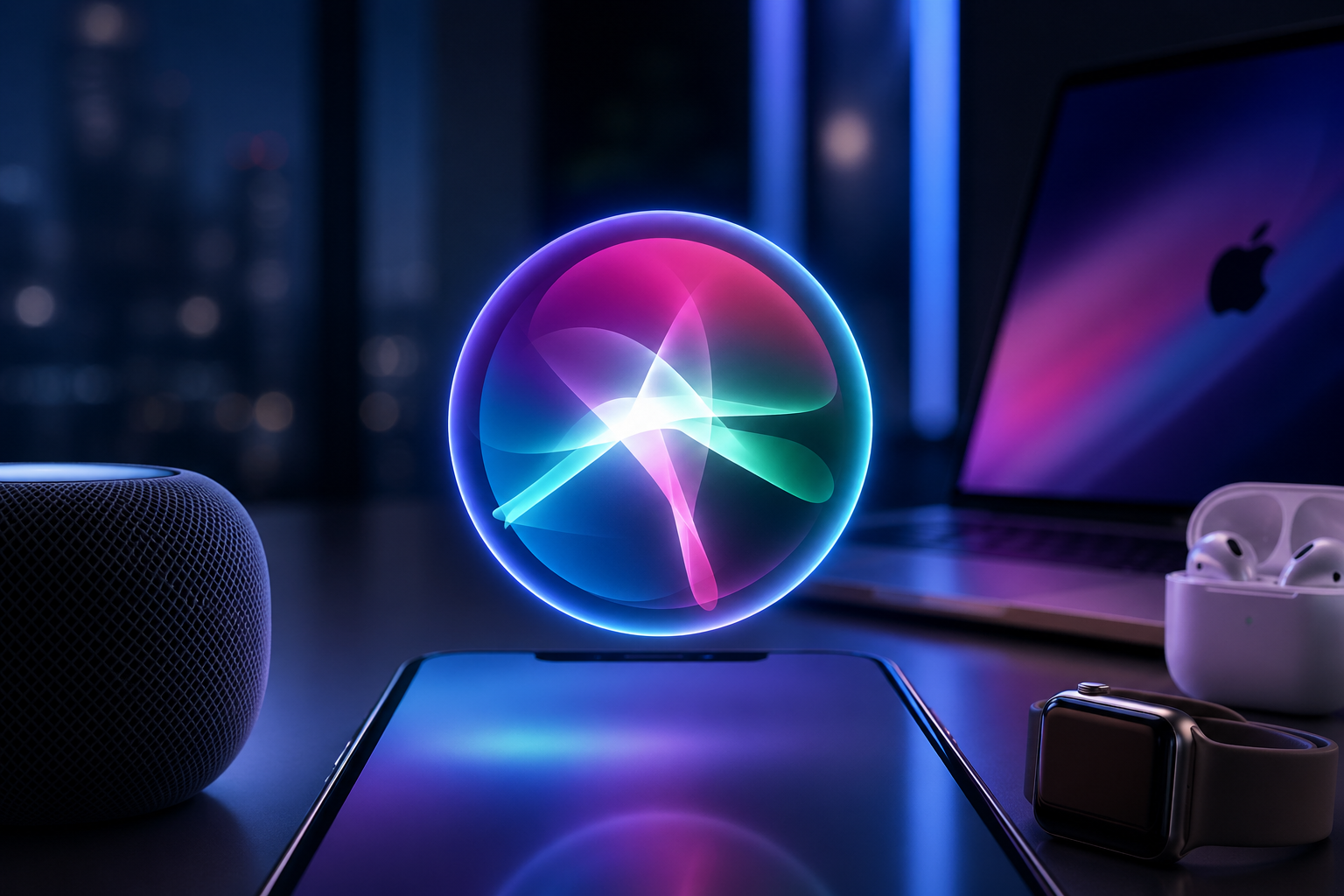
Apple is stepping into a new era, and it’s not subtle about it. The company is preparing to unveil a next-generation AI-powered Siri, a move that could redefine how we interact with technology on a daily basis. For years, Siri has been the polite but somewhat limited assistant sitting inside iPhones, answering basic queries and setting reminders. But now, Apple is aiming for something far more ambitious—an intelligent, context-aware assistant that feels less like a tool and more like a digital companion.
The timing couldn’t be more critical. The AI race is heating up, with competitors rapidly advancing their conversational models and integrating them into everyday devices. Apple, traditionally known for perfecting rather than rushing technology, is now catching up with a bold strategy. Reports indicate that the new Siri will leverage advanced conversational capabilities, allowing multi-step interactions and continuous dialogue instead of one-off commands.
This transformation signals more than just a feature upgrade. It represents Apple’s attempt to reshape its entire ecosystem around artificial intelligence, making Siri the central nervous system of its devices. Think of it like upgrading from a basic calculator to a full-fledged AI brain—everything becomes smarter, faster, and more intuitive.
The Evolution of Siri Over the Years
When Siri first launched in 2011, it felt revolutionary. You could ask your phone questions, set alarms, or send messages without touching the screen. At the time, that felt like science fiction. But as years passed, competitors began to outpace Siri with more advanced capabilities, especially in understanding context and natural language.
Siri’s limitations became increasingly noticeable. It struggled with follow-up questions, couldn’t handle complex tasks, and often required very specific phrasing. While Apple kept improving it incrementally, the changes were never dramatic enough to compete with modern AI assistants.
That’s where the next-gen upgrade comes in. Apple has been working on a complete overhaul, not just tweaks. The new version promises on-screen awareness, personal context understanding, and deeper app integration, features that were initially delayed to meet Apple’s quality standards.
In simple terms, Siri is finally growing up. It’s moving from a reactive assistant to a proactive intelligence layer that understands what you’re doing and helps you do it better.
Why Apple Needed a Major AI Upgrade
Let’s be honest—Apple couldn’t afford to stay behind in AI any longer. The rise of conversational AI tools changed user expectations almost overnight. People now expect assistants to understand context, remember previous interactions, and perform complex tasks seamlessly.
Apple’s delay in launching advanced AI features wasn’t due to a lack of ambition but rather its strict quality standards. The company reportedly postponed the rollout to ensure reliability, accuracy, and a polished user experience.
There’s also a strategic angle here. Apple’s ecosystem thrives on integration. If Siri becomes powerful enough, it could tie together iPhones, Macs, Apple Watches, and even smart home devices into a single intelligent system. That’s not just convenience—that’s ecosystem lock-in at a whole new level.
What Is the Next-Gen AI-Powered Siri?
The next-gen Siri is not just an assistant—it’s an AI-driven platform designed to understand, predict, and act. Apple is essentially rebuilding Siri from the ground up using modern AI technologies, including large language models.
At its core, the new Siri aims to behave more like a conversational partner. Instead of responding to isolated commands, it can maintain context across multiple interactions. Ask a question, follow up on it, and refine it—all without repeating yourself.
This shift transforms Siri from a command-based tool into an interactive AI agent. It’s like upgrading from a walkie-talkie to a full conversation with someone who actually remembers what you said five minutes ago.
Integration with Apple Intelligence Ecosystem
Apple isn’t just upgrading Siri in isolation. It’s integrating it into a broader framework known as Apple Intelligence, which connects AI capabilities across devices and services.
This means Siri will have access to emails, messages, calendar events, and even on-screen content. Imagine asking Siri to find a restaurant your friend mentioned in a text—it can now do that by analyzing your messages and pulling relevant information.
This level of integration makes Siri far more useful in real-world scenarios. It’s no longer about answering trivia questions—it’s about helping you navigate your digital life efficiently.
Key Features of Apple’s New Siri
Conversational AI and Context Awareness
One of the most exciting upgrades is Siri’s ability to hold natural conversations. You can ask follow-up questions, clarify requests, and even change topics without starting from scratch.
This is powered by advanced AI models that understand context, making interactions feel more human. Instead of rigid commands, you get fluid conversations that adapt to your needs.
Deep App Integration and Voice Control
The new Siri will be able to control apps more deeply than ever before. You won’t just open apps—you’ll interact with them entirely through voice.
From editing photos to sending messages or even managing tasks within third-party apps, Siri becomes a hands-free control center for your device.
Personalized User Experience
Siri will learn from your behavior, preferences, and routines. Over time, it will anticipate your needs, offering suggestions before you even ask.
This personalization is what turns Siri from a tool into a companion. It’s like having an assistant who knows your habits and helps you stay one step ahead.
On-Screen Awareness Capabilities
One of the most groundbreaking features is on-screen awareness. Siri can analyze what’s currently displayed on your device and provide relevant assistance.
For example, if you’re reading an email about a meeting, Siri can suggest adding it to your calendar or setting a reminder—all without manual input.
Technology Behind the New Siri
Role of Large Language Models (LLMs)
The backbone of the new Siri is large language models (LLMs), the same technology powering modern AI chatbots. These models enable Siri to understand complex queries and generate meaningful responses.
Partnership with AI Platforms
Apple is reportedly leveraging external AI technologies alongside its own systems. This hybrid approach allows Siri to combine Apple’s ecosystem strengths with cutting-edge AI capabilities.
Integration with Advanced AI Models
This integration ensures that Siri can handle everything from simple tasks to complex problem-solving, bridging the gap between traditional assistants and modern AI systems.
Siri vs Competitors
Comparison with ChatGPT and Google Assistant
| Feature | Siri (Next-Gen) | ChatGPT | Google Assistant |
|---|---|---|---|
| Conversational AI | Advanced | Very Advanced | Advanced |
| App Integration | Deep | Limited | Moderate |
| Privacy Focus | High | Moderate | Moderate |
| Ecosystem Integration | Strong | Weak | Strong |
Siri’s biggest advantage lies in its ecosystem integration and privacy focus, while competitors excel in raw conversational power.
Strengths and Weaknesses
Siri’s strength is its seamless integration with Apple devices. Its weakness, historically, has been limited conversational ability. The new upgrade aims to eliminate that gap entirely.
Impact on Apple Ecosystem
iPhone, Mac, and Wearables Integration
The new Siri will act as a central hub across all Apple devices. Whether you’re using an iPhone, Mac, or Apple Watch, Siri will provide a consistent and intelligent experience.
Future of Smart Homes and IoT
Siri’s evolution could redefine smart homes. Imagine controlling lights, security systems, and appliances through natural conversations instead of rigid commands.
Challenges and Delays in Development
Technical Hurdles and Testing Issues
Apple faced several challenges during development, including speed and accuracy issues in early versions. Some features were delayed to ensure they met Apple’s high standards.
Apple’s Quality-First Approach
Unlike competitors, Apple prioritizes reliability over speed. This approach may slow down releases but ensures a polished final product.
Privacy and Security Innovations
On-Device Processing
Apple emphasizes on-device AI processing, reducing reliance on cloud servers and enhancing privacy.
Private Cloud Compute
For more complex tasks, Apple uses secure cloud processing while maintaining strict privacy controls.
Future of Smart Assistants
Shift from Voice Assistants to AI Agents
We’re witnessing a shift from simple voice assistants to intelligent AI agents capable of performing complex tasks autonomously.
What This Means for Users
For users, this means less manual effort and more automation. Your devices won’t just respond—they’ll anticipate and act.
Conclusion
Apple’s next-gen AI-powered Siri isn’t just an upgrade—it’s a transformation. By combining conversational AI, deep integration, and privacy-focused design, Apple is positioning Siri as a central pillar of its ecosystem.
The real question isn’t whether Siri will improve—it’s whether it can redefine the AI assistant landscape. If Apple delivers on its promises, Siri could become the benchmark for smart assistants worldwide.
FAQs
1. When will the new AI-powered Siri be released?
Apple has confirmed that the next-gen Siri is expected to launch in 2026, possibly alongside major iOS updates.
2. What makes the new Siri different from the current version?
The new Siri features conversational AI, context awareness, and deep app integration, making it far more advanced than the current version.
3. Will Siri work offline?
Yes, many features will use on-device processing, allowing Siri to function even without an internet connection.
4. Is Siri becoming like ChatGPT?
In many ways, yes. Siri will adopt chatbot-like conversational abilities, enabling more natural interactions.
5. How does Apple ensure user privacy with AI?
Apple uses on-device processing and secure cloud systems, ensuring user data remains protected.







Leave A Comment