
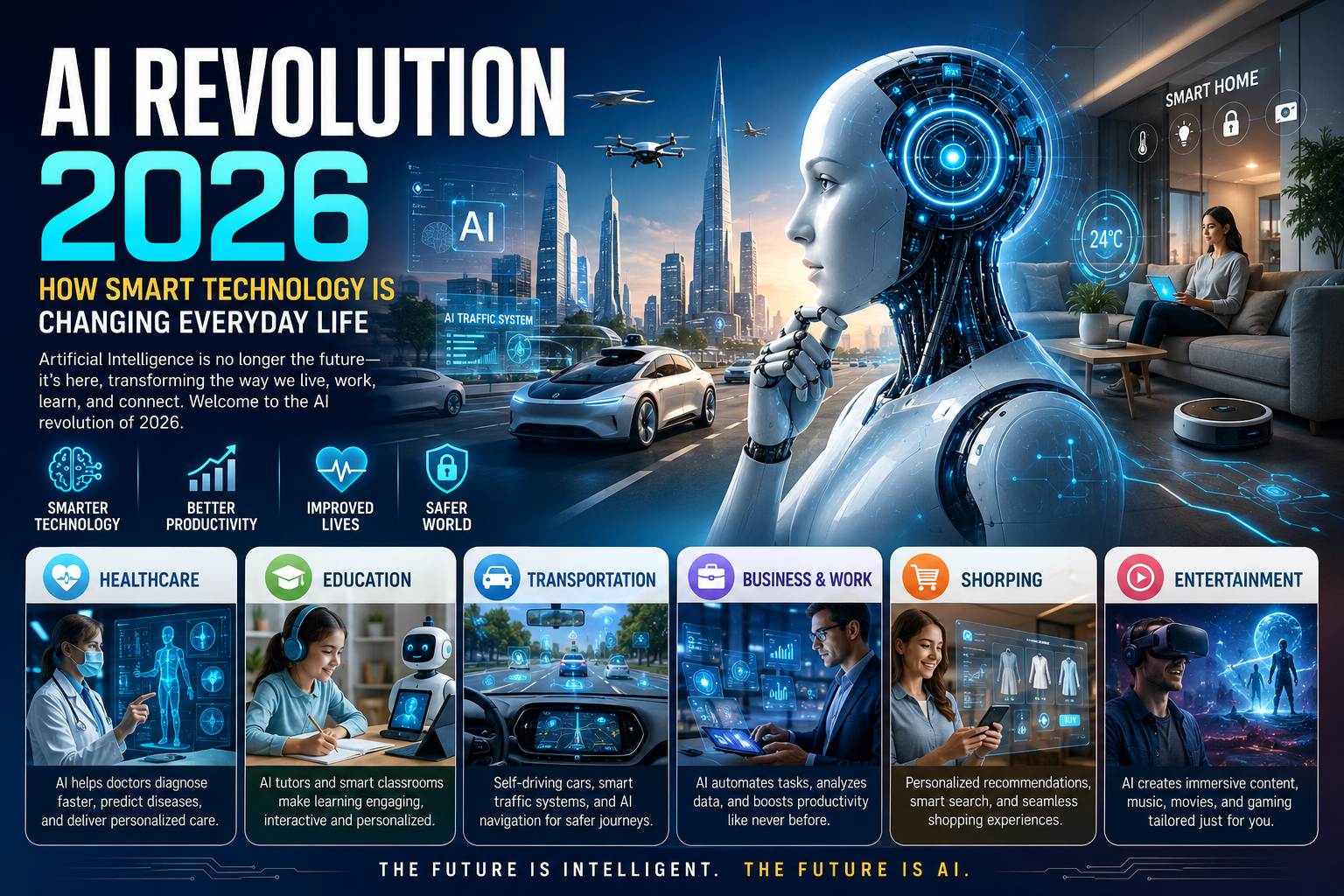
Artificial intelligence is no longer a futuristic idea hiding inside science fiction movies. In 2026, AI has become part of normal life in ways most people never imagined just a few years ago. From smart homes and wearable health devices to AI-powered workplaces and self-learning apps, the technology is moving faster than society can fully absorb. What once felt experimental now feels routine. People wake up to AI-generated schedules, drive with intelligent navigation systems, shop through recommendation engines, and work alongside digital assistants that can analyze information in seconds.
The speed of AI adoption is astonishing. According to the 2026 IEEE Global Study, 96% of technology leaders believe AI innovation and adoption will continue accelerating rapidly in 2026. Businesses are no longer asking whether they should use AI. They are asking how quickly they can integrate it before competitors gain an advantage. At the same time, consumers are becoming deeply connected to AI systems without even noticing it. AI is quietly operating in the background like electricity or Wi-Fi—always present, always active.
What makes the AI revolution different from previous technology waves is its ability to think, adapt, and improve. Smartphones changed communication. The internet changed access to information. AI is changing decision-making itself. That is a much deeper transformation. It is altering how humans learn, work, create, communicate, shop, and even think about the future. The world of 2026 feels like the beginning of a new digital civilization, and AI is sitting at the center of it.
The Rise of Artificial Intelligence in 2026
Why AI Adoption Is Accelerating Worldwide
The global AI race is moving at lightning speed because artificial intelligence has become a competitive necessity rather than a luxury. Businesses, governments, schools, hospitals, and even small startups are investing heavily in AI systems to improve efficiency and reduce operational costs. According to KPMG’s Global Tech Report 2026, 88% of organizations are investing in agentic AI systems, while 74% say AI adoption is already delivering measurable business value. That number alone shows how deeply embedded AI has become in modern infrastructure.
One major reason for this acceleration is accessibility. In the past, advanced AI tools required technical expertise and massive computing resources. In 2026, cloud-based AI platforms, low-code tools, and AI assistants allow ordinary people to build smart workflows without being software engineers. AI is becoming democratized. It is no longer locked inside Silicon Valley laboratories. Small business owners, teachers, students, marketers, and freelancers are using AI every day to increase productivity.
Another reason is consumer demand. People now expect convenience, personalization, and speed in almost every digital interaction. AI fulfills those expectations. Streaming platforms recommend shows instantly. Shopping apps predict what users want before they search. Smart devices optimize home energy use automatically. AI systems learn from patterns and behaviors, making technology feel increasingly personalized. According to IEEE’s 2026 research, over half of respondents believe AI-powered personal assistants and family management systems will reach mass-market adoption in 2026.
The Shift From Basic Automation to Agentic AI
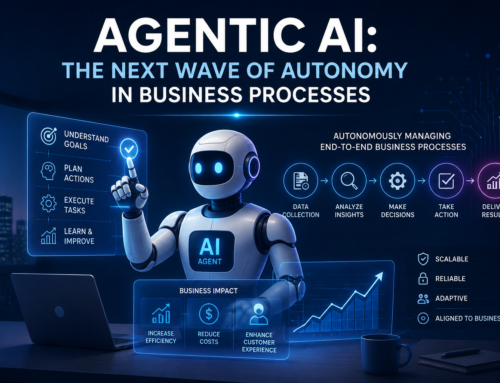
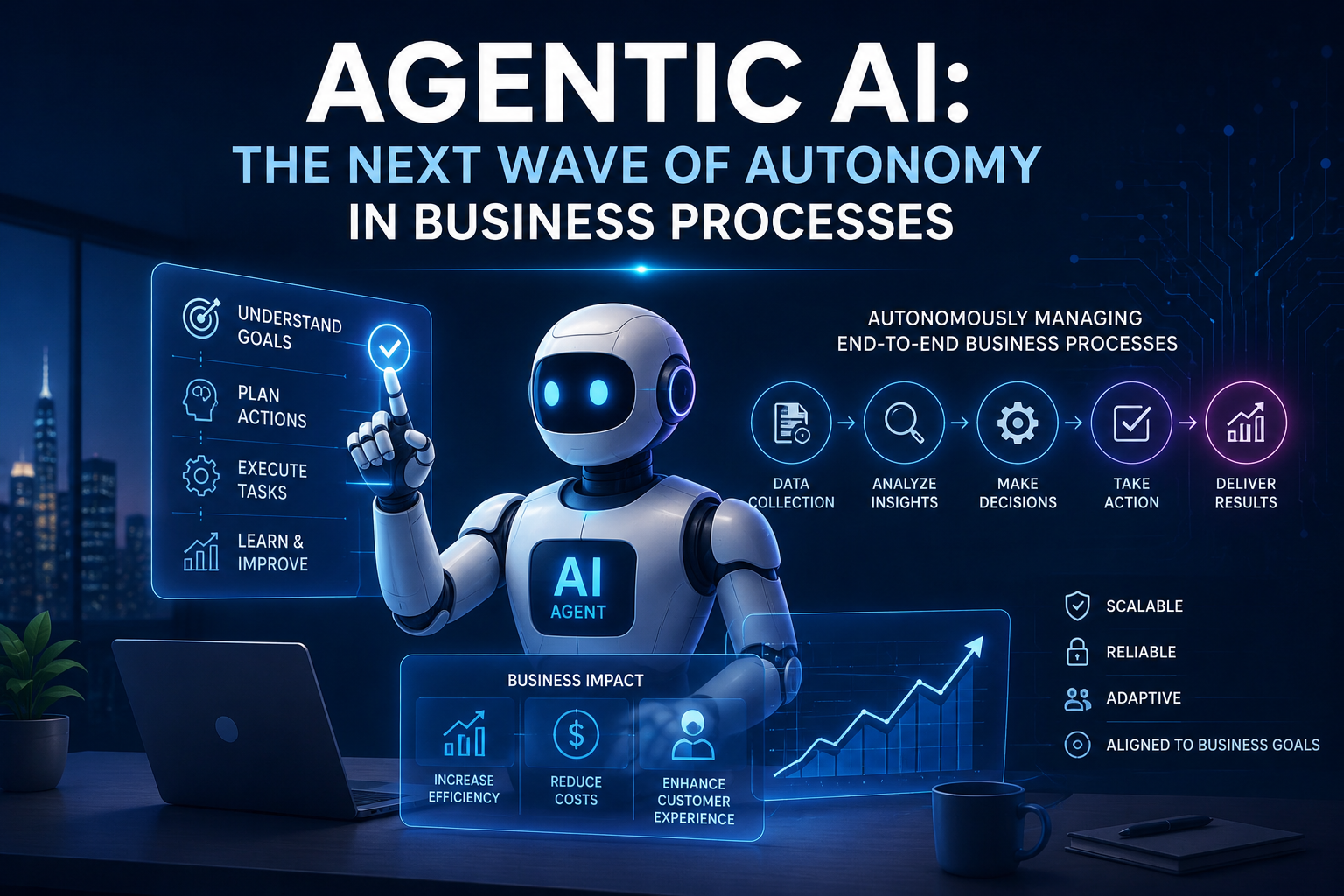
Earlier AI systems mainly followed instructions. They automated repetitive tasks but still depended heavily on human direction. The AI systems of 2026 are different because they are becoming “agentic.” That means they can independently plan tasks, make decisions, coordinate workflows, and adapt to changing conditions. IBM predicts that AI agents will evolve from simple assistants into fully orchestrated collaborative systems that handle complex responsibilities across industries.
Think about how dramatic that shift really is. A basic chatbot answers questions. An AI agent can schedule meetings, summarize emails, analyze reports, manage customer communication, and generate business strategies with minimal supervision. It acts less like a tool and more like a digital coworker. That changes how organizations operate. Human workers increasingly focus on judgment, creativity, and emotional intelligence while AI handles repetitive execution tasks.
The rise of agentic AI is also transforming consumer experiences. Smart assistants are becoming proactive instead of reactive. Your AI device might remind you to leave early because traffic conditions changed or automatically reorder household supplies before they run out. AI is beginning to anticipate needs instead of simply responding to commands. This evolution is making technology feel more human-like and integrated into daily life.
Still, this rapid transformation creates anxiety. Many people worry that dependence on AI could weaken critical thinking skills or reduce human interaction. A growing number of younger users express concerns about AI’s effect on creativity and learning. The AI revolution is not only technological—it is psychological and cultural too.
AI at Home
Smart Homes Are Becoming Truly Intelligent
The concept of the smart home existed long before 2026, but most early systems felt clunky and disconnected. Devices struggled to communicate effectively, voice assistants misunderstood commands, and automation often created more frustration than convenience. Today’s AI-powered homes are dramatically more intelligent. AI systems now analyze behavior patterns, energy usage, schedules, and preferences to create seamless living environments.
Modern smart homes can automatically adjust lighting based on mood or time of day, optimize temperature settings to reduce electricity costs, and detect unusual activity for security purposes. AI-powered refrigerators monitor food inventory and recommend recipes using available ingredients. Smart mirrors provide health updates and daily schedules. Even robotic vacuum cleaners have evolved into adaptive navigation systems capable of learning household layouts over time.
This transformation is partly driven by edge AI technology. Instead of sending every request to distant cloud servers, many devices now process data locally. Deloitte reports that edge AI is becoming one of the biggest technology trends of 2026 because it improves speed, privacy, and reliability. That means smart devices can operate faster while reducing internet dependency. The home is becoming an intelligent ecosystem rather than a collection of disconnected gadgets.
People are also beginning to emotionally bond with AI home systems. Families rely on virtual assistants to organize routines, remind children about school tasks, and manage calendars. AI has quietly become a household coordinator. It is almost like having an invisible digital butler living inside the walls of the home.
AI-Powered Virtual Assistants and Daily Planning
Virtual assistants in 2026 are vastly more advanced than the simple voice assistants people used a few years ago. Instead of merely answering questions or setting timers, these AI systems now function as personal productivity managers. They can summarize meetings, prioritize tasks, draft responses, recommend lifestyle improvements, and coordinate schedules across devices and platforms.
This shift reflects the growing demand for cognitive support. Modern life feels overloaded with notifications, appointments, deadlines, and information. AI assistants help reduce mental clutter by organizing daily activities intelligently. According to Microsoft’s 2026 Work Trend research, nearly half of AI interactions now involve high-level cognitive tasks rather than basic commands. AI is no longer limited to simple productivity. It is participating in decision-making processes.
Here is a quick comparison of how virtual assistants evolved:
| Feature | Early AI Assistants | AI Assistants in 2026 |
|---|---|---|
| Basic voice commands | Yes | Yes |
| Context awareness | Limited | Advanced |
| Workflow management | Minimal | Extensive |
| Predictive suggestions | Rare | Common |
| Multi-device coordination | Weak | Seamless |
| Emotional interaction | Robotic | Conversational |
These systems are becoming increasingly conversational and emotionally aware. Some AI assistants can detect frustration in speech patterns or adapt communication styles based on user preferences. That makes interactions feel smoother and more human. While some people enjoy this convenience, others worry society may become overly dependent on machines for organization and emotional support.
AI in Healthcare
Faster Diagnoses and Personalized Treatment
Healthcare is one of the industries experiencing the most dramatic AI-driven transformation in 2026. Hospitals, clinics, and research centers are using AI to improve diagnostic accuracy, reduce treatment delays, and personalize patient care. AI systems can analyze medical images, genetic data, and patient histories much faster than humans alone. That speed can save lives.
Doctors are increasingly using AI-powered diagnostic tools to detect diseases such as cancer, heart conditions, and neurological disorders at earlier stages. AI systems analyze patterns invisible to the human eye, identifying risks before symptoms become severe. Instead of replacing doctors, AI acts like an advanced analytical partner that strengthens decision-making.
Personalized medicine is also becoming more practical because of AI. Traditional treatments often follow generalized approaches, but AI can analyze individual patient data to recommend tailored therapies. That means treatments become more precise, effective, and efficient. AI is helping healthcare shift away from reactive medicine toward preventive care.
The pharmaceutical industry is also evolving rapidly. According to IEEE research, AI-driven disease mapping and drug discovery remain major focus areas for 2026. AI models can process enormous datasets in hours rather than years, dramatically accelerating medical research. What once required massive laboratory teams can now be supported by intelligent algorithms capable of discovering hidden biological patterns.
Wearable Health Technology and Real-Time Monitoring
Wearable technology has become smarter, smaller, and more integrated into daily life. Smartwatches, rings, patches, and biometric sensors continuously monitor heart rate, sleep quality, oxygen levels, stress, and physical activity. AI analyzes this data in real time, offering health insights and warnings before medical emergencies occur.
Imagine your wearable device detecting irregular heart activity days before symptoms become noticeable. That is no longer science fiction. AI-powered health monitoring is becoming proactive rather than reactive. Devices can alert users to dehydration risks, unusual stress patterns, or abnormal sleep behavior. Some systems even connect directly to healthcare providers.
This constant monitoring changes how people think about health. Instead of only visiting doctors after problems appear, individuals now receive continuous health feedback throughout daily life. AI acts almost like a personal health guardian quietly monitoring the body in the background.
Still, privacy concerns remain significant. Health data is incredibly sensitive, and many consumers worry about how corporations store and use biometric information. Trust will become one of the defining issues of the AI healthcare revolution.
AI in Education
Personalized Learning Experiences
Education in 2026 looks very different from the traditional classroom model many people grew up with. AI-driven learning systems are replacing rigid one-size-fits-all teaching methods with personalized educational experiences. Students learn at different speeds, and AI platforms adapt lessons based on performance, strengths, and weaknesses.
If a student struggles with mathematics, the AI system automatically adjusts exercises, explanations, and practice sessions. If another student excels, the system introduces more advanced material instead of forcing unnecessary repetition. This creates more efficient and engaging learning environments.
AI also helps teachers reduce administrative workload. Tasks like grading assignments, tracking attendance, and generating reports are increasingly automated. That allows educators to focus more on mentorship and human interaction instead of repetitive paperwork.
According to IEEE’s 2026 survey, AI-powered educational systems remain one of the top projected applications of artificial intelligence. The goal is not to eliminate teachers but to improve educational outcomes by combining human instruction with intelligent technology.
AI Tutors and Digital Classrooms
AI tutors are becoming extremely popular because they provide instant support outside traditional classroom hours. Students can ask questions anytime and receive personalized explanations tailored to their learning style. This is especially valuable in regions where educational resources are limited.
Digital classrooms powered by AI can also analyze engagement levels during lessons. Some systems track eye movement, participation, and response patterns to identify when students lose focus or struggle with concepts. Teachers then receive real-time insights that improve lesson delivery.
The rise of AI tutors also reflects changing student behavior. Many younger learners feel more comfortable asking questions to AI systems because they fear less judgment compared to classroom settings. That creates new opportunities for personalized learning, but it also raises concerns about overdependence on technology.
Education is becoming more flexible, data-driven, and globally connected. AI is turning learning into a continuous process rather than something confined to classrooms and textbooks.
AI in Transportation
Autonomous Vehicles and Smart Traffic Systems
Transportation systems are evolving rapidly because AI can process real-time environmental data far faster than human drivers. Autonomous vehicles are no longer experimental prototypes hidden in research labs. In 2026, self-driving systems are becoming increasingly common in logistics, ride-sharing, and public transport.
AI-powered traffic systems are also improving urban mobility. Smart cameras and predictive analytics help reduce congestion by optimizing traffic flow dynamically. Instead of relying on fixed traffic light schedules, intelligent systems adapt to changing road conditions instantly.
The automotive industry sees AI as a long-term revolution rather than a short-term trend. According to IEEE research, autonomous vehicles remain one of the top technology sectors influenced by AI in 2026. The implications are enormous. Safer roads, reduced accidents, lower fuel consumption, and faster transportation networks could reshape entire cities.
At the same time, society faces difficult ethical questions. How should autonomous systems make decisions during unavoidable accidents? Who becomes legally responsible when AI systems fail? These debates are becoming increasingly urgent as AI transportation systems expand.
AI-Powered Navigation and Public Transport
Modern navigation apps already use AI extensively, but 2026 systems are becoming far more predictive and integrated. Navigation tools now analyze weather conditions, driver behavior, fuel efficiency, public transport schedules, and real-time traffic patterns simultaneously.
Public transportation systems are also becoming smarter. AI predicts passenger demand, optimizes bus routes, and improves railway scheduling. Cities using intelligent transportation systems can reduce delays and operating costs significantly.
For ordinary people, the experience feels smoother and less stressful. Commutes become more efficient, travel planning becomes automated, and transportation networks operate more dynamically. AI is transforming transportation into a responsive ecosystem instead of a rigid infrastructure.
AI in Business and Workplaces
AI Automation and Productivity Gains
The modern workplace is being rebuilt around AI. Businesses are using AI to automate repetitive processes, analyze customer behavior, generate reports, manage inventories, and improve decision-making. According to Microsoft’s Work Trend Index 2026, many employees are already achieving results with AI that would have been impossible just a year earlier.
AI productivity tools save enormous amounts of time. Marketing teams generate content faster. Customer support systems operate 24/7. Financial analysts process data instantly. HR departments automate recruitment screening. AI acts like an efficiency engine accelerating almost every professional workflow.
Here is a quick overview of AI’s business impact:
| Business Area | AI Impact in 2026 |
|---|---|
| Customer Support | Automated chat and issue resolution |
| Marketing | Personalized campaigns and analytics |
| HR | Smart recruitment and screening |
| Finance | Fraud detection and forecasting |
| Logistics | Supply chain optimization |
| Software Development | AI-assisted coding |
The biggest transformation may not be automation itself but collaboration between humans and AI systems. AI handles speed and data analysis while humans focus on strategy, creativity, and emotional intelligence.
The Evolution of Human Jobs in the AI Era
People often fear AI because they assume it will eliminate jobs entirely. The reality is more complicated. Some repetitive roles are disappearing, but entirely new categories of work are emerging. AI trainers, prompt engineers, AI ethicists, automation consultants, and digital workflow designers are becoming important careers.
The workplace of 2026 increasingly rewards adaptability. Workers who understand how to collaborate with AI gain enormous advantages. Those who resist technological change risk falling behind. This creates both opportunity and tension.
Experts believe future workplaces will prioritize uniquely human skills such as leadership, empathy, critical thinking, and creativity. AI may outperform humans in data processing, but it still struggles with emotional intelligence and nuanced judgment.
The challenge for society is ensuring workers receive proper education and retraining opportunities. Without that support, AI-driven economic inequality could become a major global issue.
AI in Shopping and Entertainment
Personalized Shopping Experiences
Shopping in 2026 feels almost predictive because AI recommendation systems analyze behavior patterns continuously. E-commerce platforms study browsing history, purchasing behavior, demographics, and even emotional reactions to create personalized experiences.
Retailers are using AI-powered virtual fitting rooms, smart pricing systems, and predictive inventory management. Customers receive product recommendations tailored specifically to their preferences. AI is transforming shopping into a highly customized experience.
According to industry research, AI is revolutionizing retail and consumer interaction through personalization and data-driven engagement. Consumers increasingly expect platforms to understand their needs instantly.
Physical stores are evolving too. Smart shelves track inventory automatically, cashier-less systems streamline purchases, and AI-powered analytics optimize store layouts. Retail is becoming a blend of digital intelligence and physical experience.
AI-Generated Media and Entertainment
Entertainment industries are also changing rapidly because AI can now generate music, videos, scripts, art, and interactive experiences. AI-generated content is becoming mainstream across streaming platforms and social media.
Recommendation engines continue shaping what people watch, listen to, and read. AI studies user behavior to maximize engagement. While this improves convenience, critics argue it can trap users inside algorithmic “content bubbles.”
Gaming is another major frontier. AI-driven NPCs behave more realistically, adaptive storylines respond to player decisions, and virtual environments become increasingly immersive. Entertainment is shifting from passive consumption toward personalized interaction.
The creative world now faces difficult questions about originality and authorship. If an AI generates music or artwork, who owns it? The technology is moving faster than legal and ethical frameworks can adapt.
Challenges of the AI Revolution
Privacy, Security, and Ethical Concerns
As AI systems collect enormous amounts of personal data, privacy concerns are intensifying. Smart devices constantly monitor behavior, preferences, locations, and interactions. That creates convenience but also significant risks.
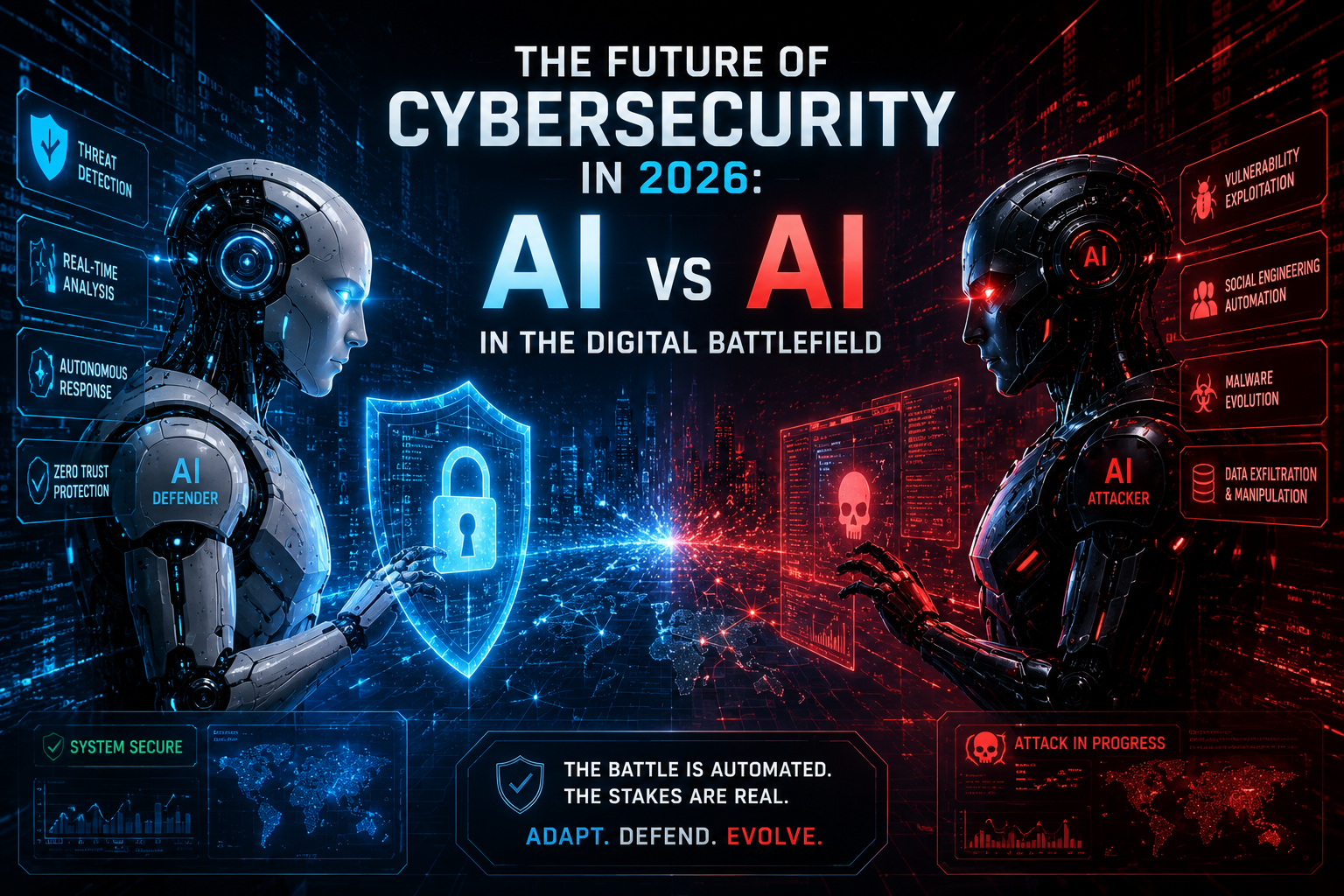
Cybersecurity experts warn that AI can become both a defensive and offensive tool. AI helps detect cyber threats faster, but malicious actors also use AI for scams, deepfakes, and sophisticated hacking techniques. According to IEEE research, real-time cybersecurity remains one of the top AI applications for 2026.
Ethical concerns are equally important. AI systems sometimes reflect biases present in training data. That can create unfair outcomes in hiring, healthcare, law enforcement, and finance. Society must decide how much decision-making power should belong to machines.
Fear of Job Displacement and AI Dependence
Many people worry that AI could reduce human independence. Students fear losing critical thinking skills. Workers fear automation. Artists fear creative replacement. These concerns are not irrational.
A growing number of younger users express frustration and anxiety about AI’s growing role in education and work. People appreciate AI convenience but also fear losing human authenticity and originality.
The challenge is balance. AI should enhance human potential rather than replace human identity. Society must develop ethical guidelines, educational reforms, and regulatory systems capable of managing rapid technological change.
The Future of AI Beyond 2026
Emerging Technologies Powered by AI
The AI revolution is still in its early stages. Emerging technologies such as robotics, extended reality, biometric authentication, and advanced wearable devices will push AI even deeper into everyday life. Experts predict AI will increasingly move from cloud systems into local devices through edge computing.
AI-powered robotics may transform industries like manufacturing, healthcare, and home assistance. Smart glasses with real-time translation and augmented reality overlays could become mainstream. AI may also accelerate scientific breakthroughs in climate modeling, medicine, and space exploration.
The future feels both exciting and unpredictable. AI is evolving from software into infrastructure.
How Society Can Prepare for an AI-Driven World
Preparing for the AI future requires more than technological innovation. Governments, schools, businesses, and individuals must adapt together. Education systems need to emphasize adaptability, creativity, and digital literacy. Workers need continuous skill development. Policymakers need updated regulations for AI ethics and privacy.
Society must also maintain human-centered values. Technology should improve human life rather than dominate it. AI is powerful, but humans still define how that power gets used.
The world of 2026 stands at a turning point. AI is no longer a glimpse of tomorrow. It is the operating system of modern life.
Conclusion
The AI revolution of 2026 is transforming everyday life faster than almost any previous technological shift in history. Artificial intelligence now touches homes, workplaces, transportation systems, healthcare, education, entertainment, and communication. It operates quietly in the background, improving convenience, personalization, and productivity while simultaneously raising complex ethical and social questions.
What makes this revolution unique is not just automation but intelligence itself. AI systems are becoming proactive collaborators capable of learning, adapting, and making decisions. Businesses are rebuilding workflows around AI agents, consumers are relying on AI-powered assistants daily, and entire industries are restructuring around intelligent systems.
At the same time, society faces important challenges involving privacy, employment, ethics, and human dependency. The future of AI will depend on how responsibly governments, businesses, and individuals manage its growth. Technology alone will not determine the future. Human choices will.
One thing is already clear: AI is no longer arriving in the future. It has arrived in the present, and everyday life will never look the same again.
FAQs
1. What is the biggest AI trend in 2026?
The biggest AI trend in 2026 is the rise of agentic AI, where AI systems can independently manage workflows, make decisions, and coordinate tasks with minimal human input.
2. How is AI changing everyday life?
AI is changing everyday life through smart homes, AI assistants, personalized shopping, healthcare monitoring, autonomous transportation, and workplace automation.
3. Will AI replace human jobs completely?
AI will automate many repetitive tasks, but it will also create new job categories. Human skills like creativity, empathy, leadership, and strategic thinking will remain valuable.
4. Is AI safe for privacy?
AI creates privacy concerns because it collects large amounts of personal data. Strong cybersecurity systems and ethical regulations are necessary to protect users.
5. What industries are most affected by AI in 2026?
Healthcare, education, transportation, finance, retail, manufacturing, and technology industries are experiencing the biggest AI-driven transformations in 2026.

Leave A Comment